There’s a version of hypocrisy that isn’t born from dishonesty.
It doesn’t come from bad intentions or a double life. It comes from blind spots — the places in our own story that nobody has ever thought to point out. The gaps between what we believe and how we actually live that exist not because we’re frauds, but because we simply haven’t looked that closely yet.
We all have them. Every single one of us.
And if your convictions run toward financial sovereignty, privacy, real money, and operating outside the reach of systems designed to extract from you — there’s a good chance you have one hiding in plain sight.
The conviction we wore proudly
When we discovered Bitcoin, something shifted.
The idea that money could exist outside the reach of central banks, governments, and institutions that had historically reached into every corner of private life — it was revelatory. So we did what any serious person does when they understand what they’re holding.
We took it off exchanges. We moved it into self-custody. We secured it behind keys that only we control. We pulled it off every public ledger we could find and placed it somewhere the world couldn’t see.
We felt sovereign. And in that one area, we were.
The blind spot
Then someone asked a simple question.
What about your house?
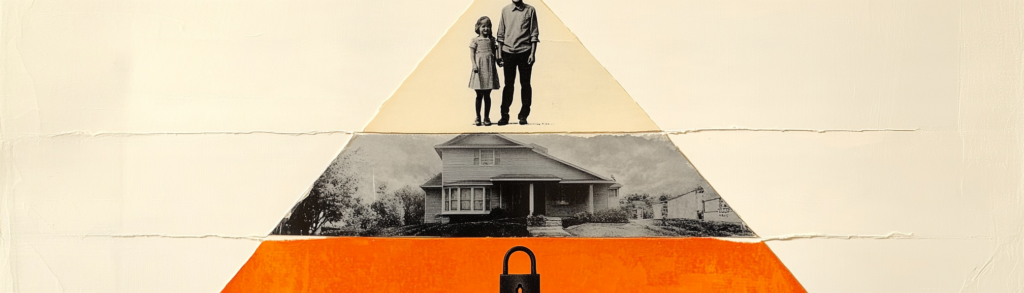
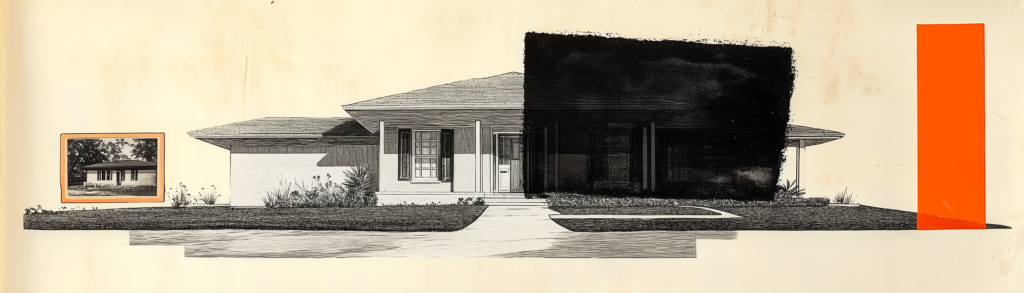
The one we’d spent years paying off. The one we took tremendous pride in owning outright — no bank, no lien, no mortgage. The one we’d sacrificed for and celebrated when the last payment cleared.
That house — our most significant physical asset, the place we lay our head down at night — is plastered all over the internet.
County records. Property databases. Public deed filings. Our name and address attached to an asset of significant value, freely searchable by anyone with a browser and thirty seconds.
And it doesn’t stop there.
Our driver’s license. Our grocery store rewards program. Our Amazon account. Our credit card. Our name on a gym membership, a library card, a utility bill. Every time we handed over our information without thinking — and we did it constantly — we were drawing a map. A detailed, publicly accessible map that leads directly to everything we own.
We secured the Bitcoin. We left the front door wide open.
This is not about guilt
We want to be clear about something.
We are not writing this to make you feel foolish. We are writing this because when it was pointed out to us, we felt foolish — and we want you to have the revelation without the regret.
The truth is that most of us were never taught to think about this. The system was not designed to teach us. Every form we filled out, every account we created, every rewards card we signed up for — these felt like small conveniences. And individually they are. Collectively they are a public profile of your life, your location, and your assets that is available to anyone who wants to look.
Including people whose job it is to look.
The part nobody tells you
Here is what most people only discover when it’s too late.
Asset-seeking attorneys are not waiting for you to do something wrong. Liability is not reserved for the guilty. If you have assets — a paid-off home, a business, an investment property, savings, Bitcoin — you are a target. Not because you’ve done anything wrong. Because you have things other people want, and the public record told them where to find it.
By the time you’re named in a lawsuit, by the time someone is pulling your property records and cross-referencing your name against public filings, the window to protect yourself has already closed. You are now playing defense in someone else’s game on a battlefield you didn’t choose.
The time to protect yourself is before any of that happens.
Set your life up like you set your Bitcoin up
You already understand the principle. You applied it to your Bitcoin because someone explained the stakes clearly enough that you took it seriously.
The stakes are the same everywhere else.
Take your name off the public record wherever you can. Remove your address from registrations that don’t require it. Separate your assets from your personal identity through lawful structures that put distance between you and what you own. Blot out the breadcrumb trail that leads from a public database to your front door.
Don’t just do it with your Bitcoin.
Do it with the house you paid off. The vehicle in your driveway. The business you built. The accounts that bear your name. The address where your family sleeps.
We’re just the messenger
We didn’t write this to alarm you. We wrote it because we wish someone had written it for us sooner.
The blind spot isn’t a character flaw. It’s just a blind spot. And now that someone has pointed at it, you can choose what to do with that information.
You already know how to protect what matters. You proved that with your Bitcoin.
Now go apply the same conviction to the rest of your life.
And please — don’t be mad at us for telling you.
Ready to align your structure with your principles? Book a consultation to learn how irrevocable trusts, Bitcoin self-custody, and private asset protection can move your wealth from the temporary to the enduring.